As soon as I started researching the presence and function of symbolic type in early print, I started noticing the very same symbols in the world around me. Non-alphabetic and non-numeric characters are everywhere...
Read moreWhy I *Loved* the Star

A set of asterisks in The Adventure of Five Hours (London: Henry Herringman, 1663), T3229, Folger Shakespeare Library
Lately, I've been thinking a lot about stars.
In early November, Twitter replaced its ★ button with a ♥ button. Many Twitter users reacted negatively to the change, lamenting the loss of the ★'s neutrality, on the one hand, and its multi-valence, on the other. Clicking ★ underneath a tweet never automatically signaled agreement, but it is hard not to feel you're agreeing with a tweet when you click ♥ (especially when Twitter itself explicitly equates ♥-ing something with liking it).
The other day, I was writing about the use of asterisks in seventeenth-century English playbooks...
Read moreThoughts Towards an Essay: Typography is/as Pedagogy
This coming March, I'm participating in a seminar at the Shakespeare Association of America Annual Meeting called "Teaching Textual Studies in/through Shakespeare," organized by Sarah Nevill and Brett Hirsch. I considered writing about one of the assignment I designed for my Shakespeare course last term—making a quarto or adopt-a-book. I thought writing about them at some length would give me occasion to reflect on what worked well and what I need to tweak if I use them again. Both assignments were attempts to teach early modern textual histories at an institution that has special collections that skew sharply post-1900, so I thought I might also discuss these assignments in that context.
But then I remembered a conversation I had with a few people on Twitter last year...
Read more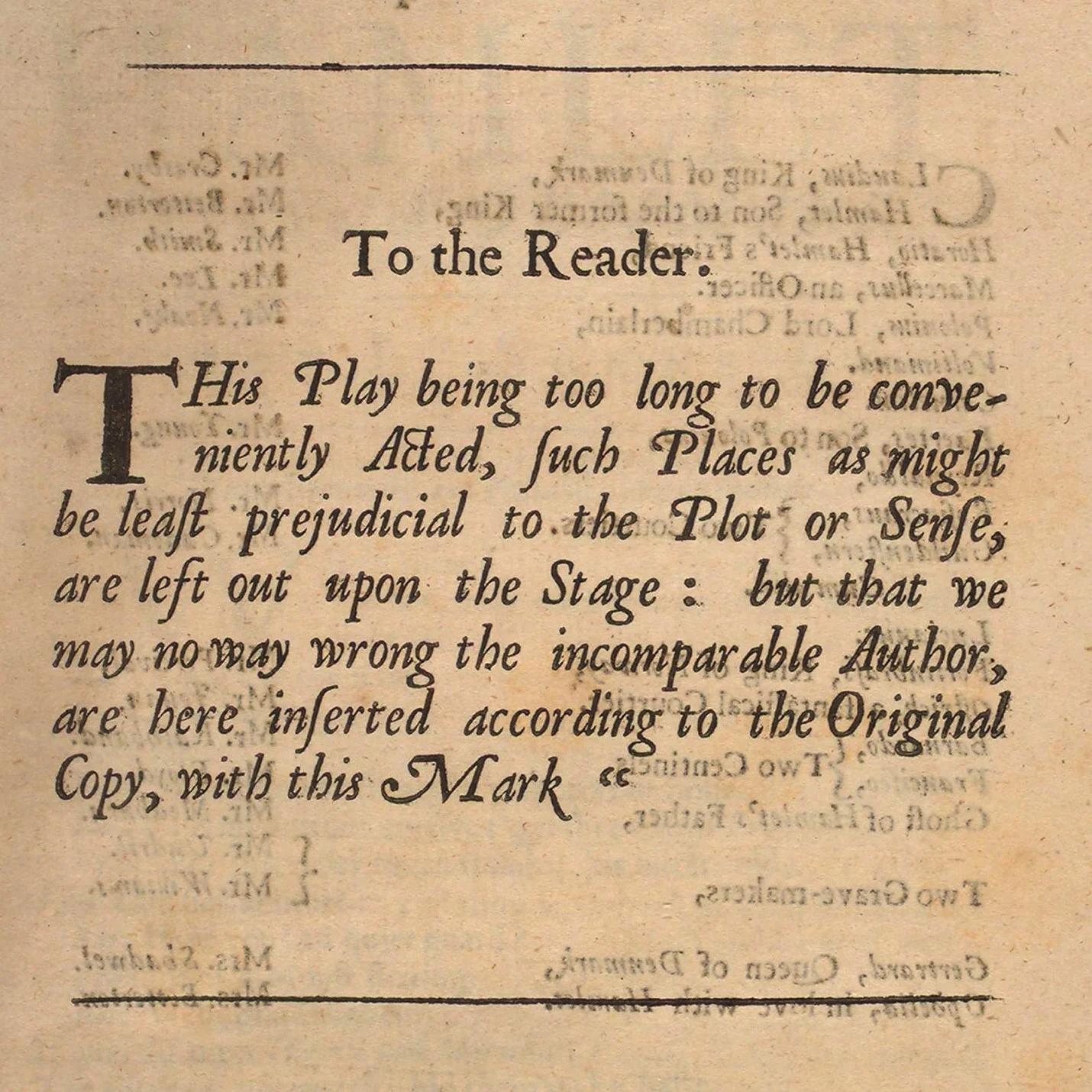
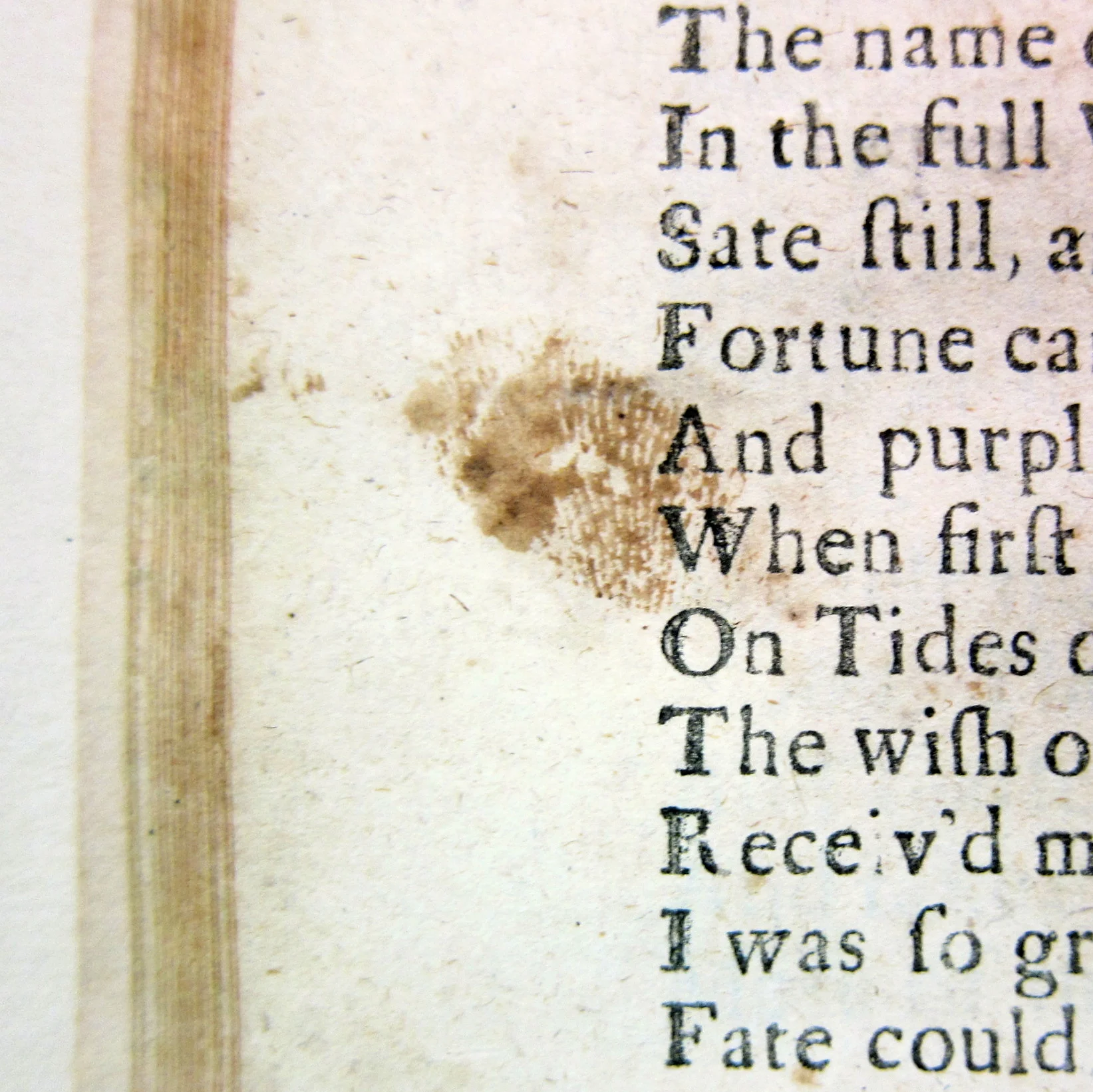
Last year, I started reserving a day in each of my Shakespeare courses for students to "make" quartos. I wrote at some length (almost exactly a year ago) about the experience of making Q1 Hamlet with my students at VCU and posted instructions, information about supplies for the activity, and a link to the sheets (which I made from EEBO printouts).
This semester, I'm teaching a senior seminar called "Early Modern Drama: Manuscript, Print, Performance" that focuses on the material-textual processes that facilitated the making of theatrical performance and printed texts of the plays. So far, my students have reverse-engineered scribal backstage plots of Doctor Faustus, performed a scene from the same play using cue scripts, and "made" quartos.