My first monograph Typographies of Performance in Early Modern England was published by Oxford University Press in 2020.
It is the first book-length study of early modern English playbook typography and tells a new history of drama from the period by considering the page designs of plays by Shakespeare and others printed between the end of the fifteenth century and the beginning of the eighteenth century. It argues that typography, broadly conceived as the disposition of type on the page, was used creatively by printers, publishers, playwrights, and other agents of the book trade to make the effects of theatricality—from the most basic (textually articulating a change in speaker) to the more complex (registering the kinesis of bodies on stage—intelligible on the page.
Read more![A diligent reader has marked off the playbooks on this bookseller list that they have bought/read (or perhaps have not bought/read).[Holk.d.29, Bodleian]](https://images.squarespace-cdn.com/content/v1/5207ed92e4b0f3bf53b55b13/1465664622995-ON4KT10SYLDMVFGTSPUV/bookseller-list.jpg)
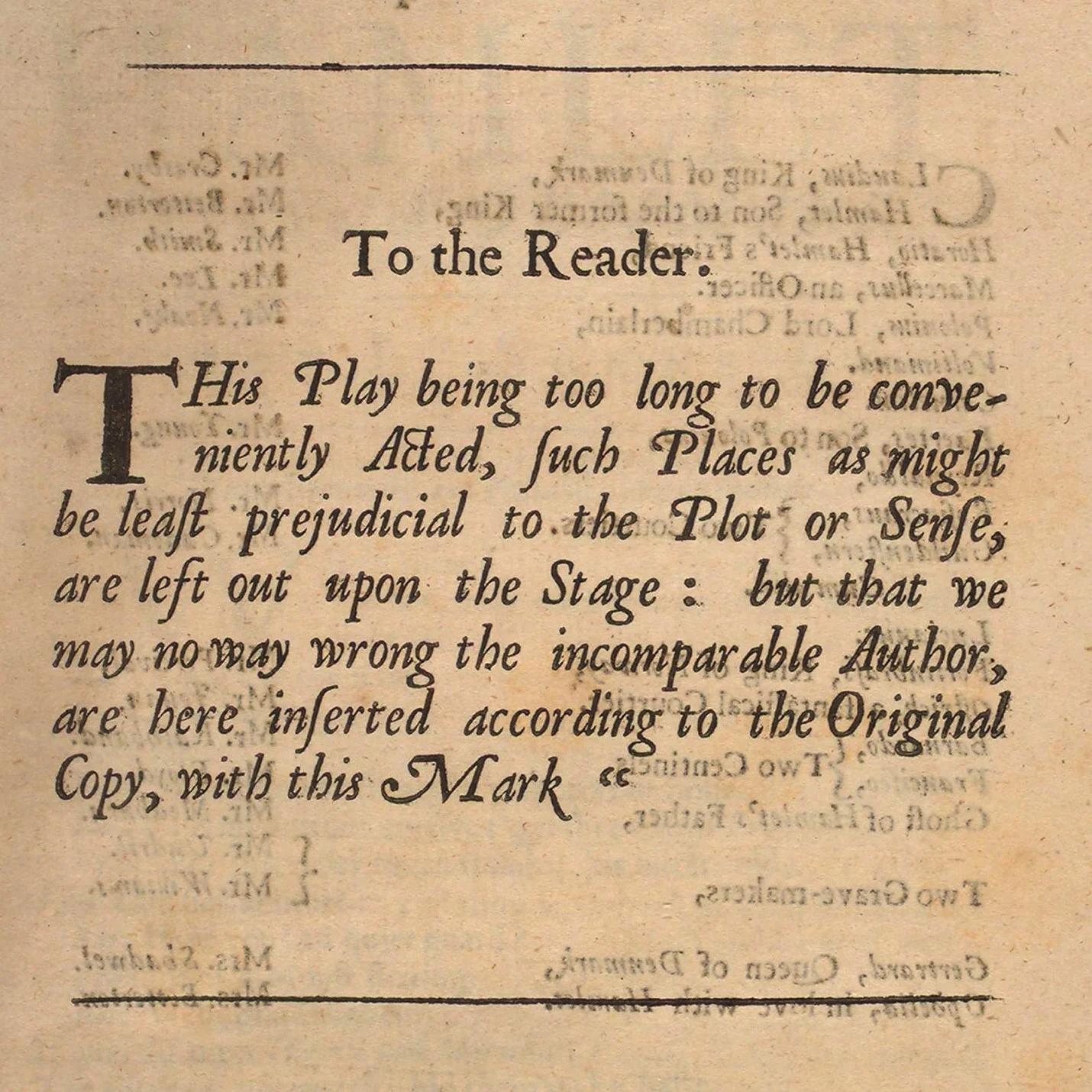
Last year, I started reserving a day in each of my Shakespeare courses for students to "make" quartos. I wrote at some length (almost exactly a year ago) about the experience of making Q1 Hamlet with my students at VCU and posted instructions, information about supplies for the activity, and a link to the sheets (which I made from EEBO printouts).
This semester, I'm teaching a senior seminar called "Early Modern Drama: Manuscript, Print, Performance" that focuses on the material-textual processes that facilitated the making of theatrical performance and printed texts of the plays. So far, my students have reverse-engineered scribal backstage plots of Doctor Faustus, performed a scene from the same play using cue scripts, and "made" quartos.