Last week, the students in my Shakespeare in Context course—the very same who are working their way through the Adopt-a-Book assignment I've written about here and here—spent a single 50-minute class period constructing a quarto of The Tragicall Historie of Hamlet Prince of Denmarke (1603). This is not a book history course, even though (1) I use the textual histories of the plays to teach close reading; and (2) we study textual afterlives in order to think about the non-authorial agencies involved in creating "Shakespeare" over time and space.
I've been excited to see so many of my colleagues at other institutions (Aaron Pratt, Piers Brown, Megan Heffernan, to name a few) report back about how their classes fared with similar quarto-making activities and have been following along with great interest as my colleague Joshua Eckhardt's graduate seminar (re)creates a Virginia Company sermon from scratch in the VCUarts print shop.
Read more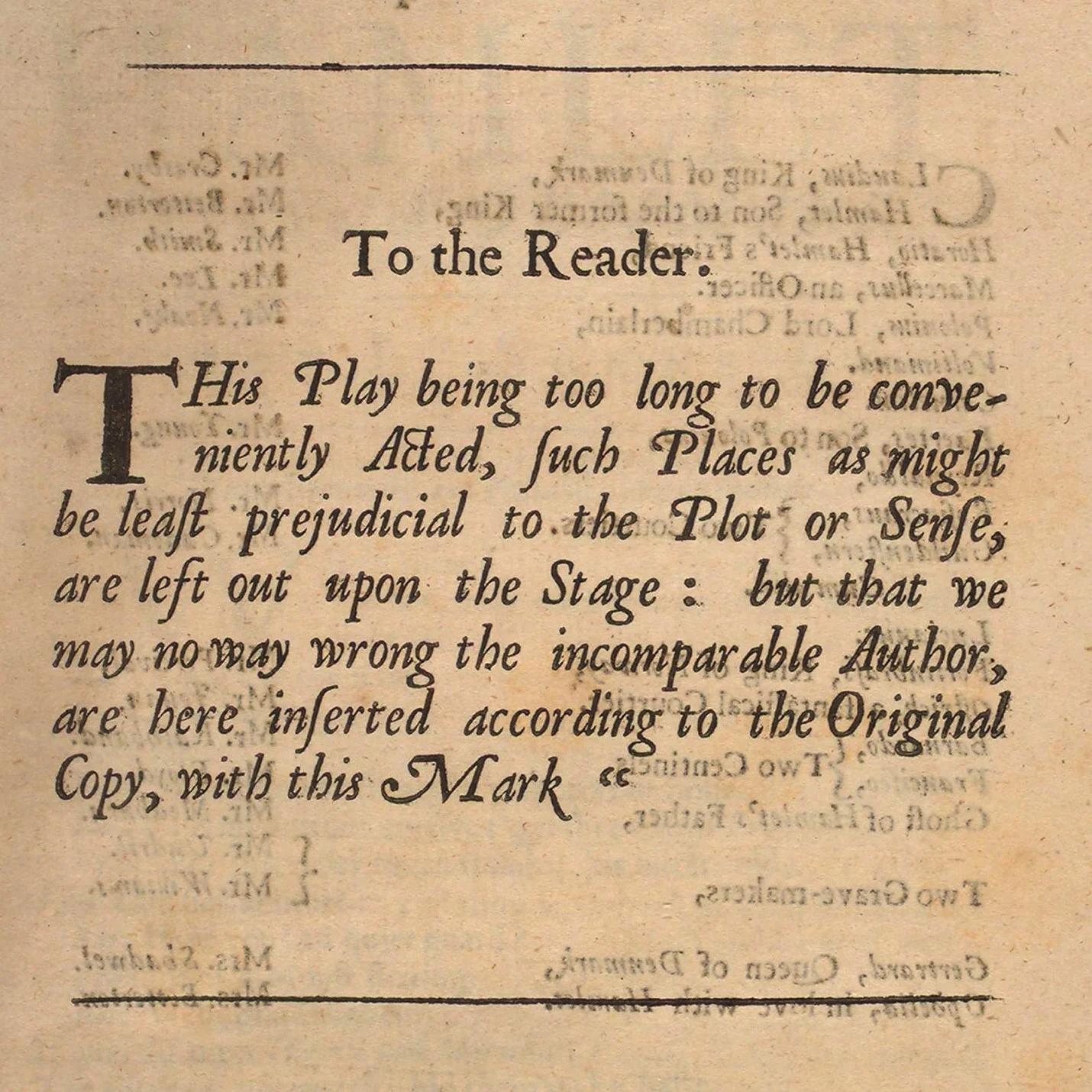
Last year, I started reserving a day in each of my Shakespeare courses for students to "make" quartos. I wrote at some length (almost exactly a year ago) about the experience of making Q1 Hamlet with my students at VCU and posted instructions, information about supplies for the activity, and a link to the sheets (which I made from EEBO printouts).
This semester, I'm teaching a senior seminar called "Early Modern Drama: Manuscript, Print, Performance" that focuses on the material-textual processes that facilitated the making of theatrical performance and printed texts of the plays. So far, my students have reverse-engineered scribal backstage plots of Doctor Faustus, performed a scene from the same play using cue scripts, and "made" quartos.