Anyone who doubts that extra-curricular humanities programming can draw a crowd should have been at VCU's James Branch Cabell Library last Friday, November 13, where upwards of 100 people—most of them undergraduates—spent the afternoon transcribing seventeenth-century manuscripts for the Folger Shakespeare Library's crowd-sourced and soon-to-be web-accessible Early Modern Manuscripts Online (EMMO) project.
As the Folger's Curator of Manuscripts Heather Wolfe reminded us in her opening remarks, the ability to read hand-written historical documents informs how we understand our cultural, social, political, religious, and economic inheritance. Wolfe stressed that manuscripts didn't die out with the rise of printing, Instead, manuscript production flourished. Printed texts were "just the tip of the textual iceberg." What would happen, she asked, if more people could read the manuscripts that are only currently accessible to a select few with special paleography training? What would we be able to learn about our past?
Read more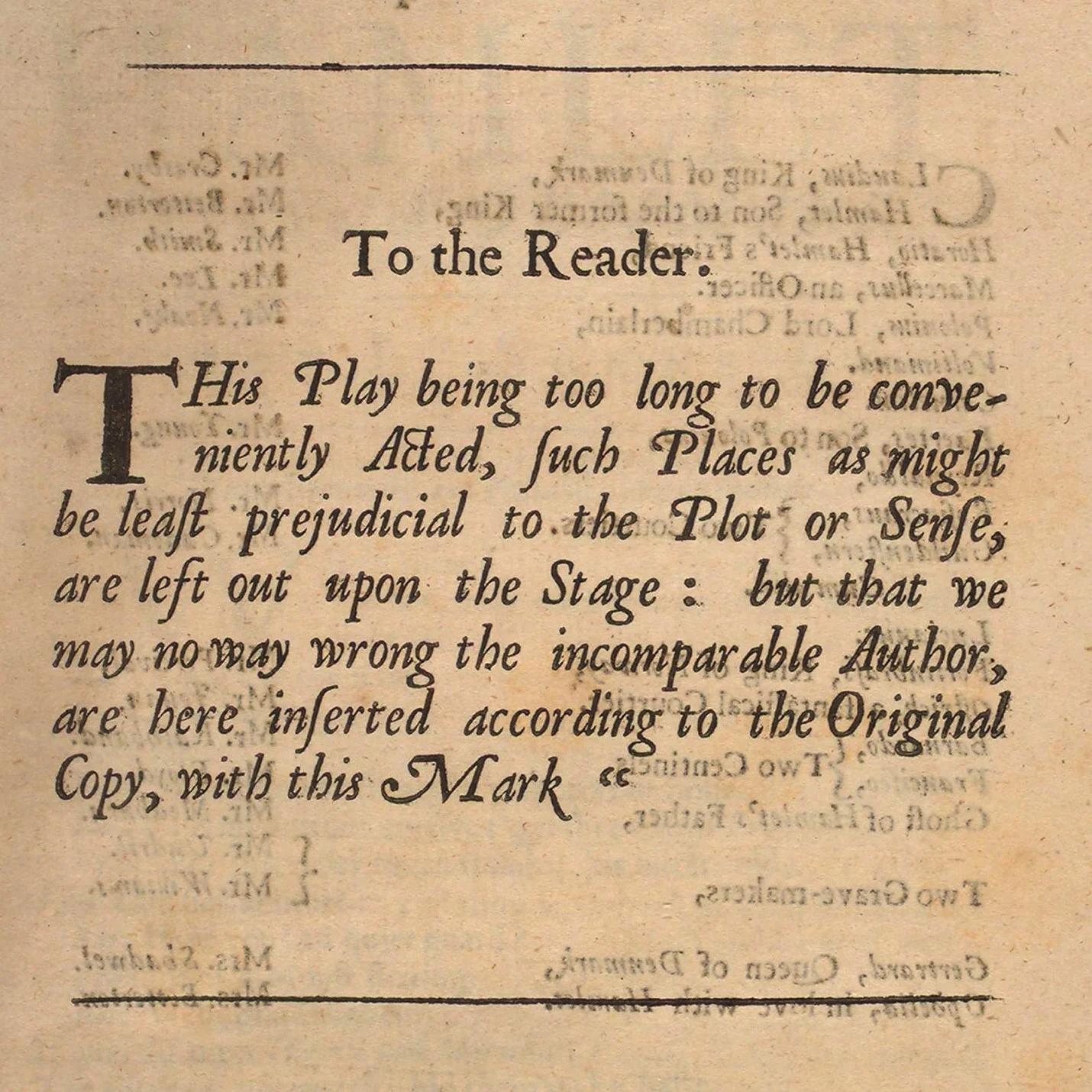
Last year, I started reserving a day in each of my Shakespeare courses for students to "make" quartos. I wrote at some length (almost exactly a year ago) about the experience of making Q1 Hamlet with my students at VCU and posted instructions, information about supplies for the activity, and a link to the sheets (which I made from EEBO printouts).
This semester, I'm teaching a senior seminar called "Early Modern Drama: Manuscript, Print, Performance" that focuses on the material-textual processes that facilitated the making of theatrical performance and printed texts of the plays. So far, my students have reverse-engineered scribal backstage plots of Doctor Faustus, performed a scene from the same play using cue scripts, and "made" quartos.